
Mastering Super Saiyan: What Goku's Training Reveals About Human Performance
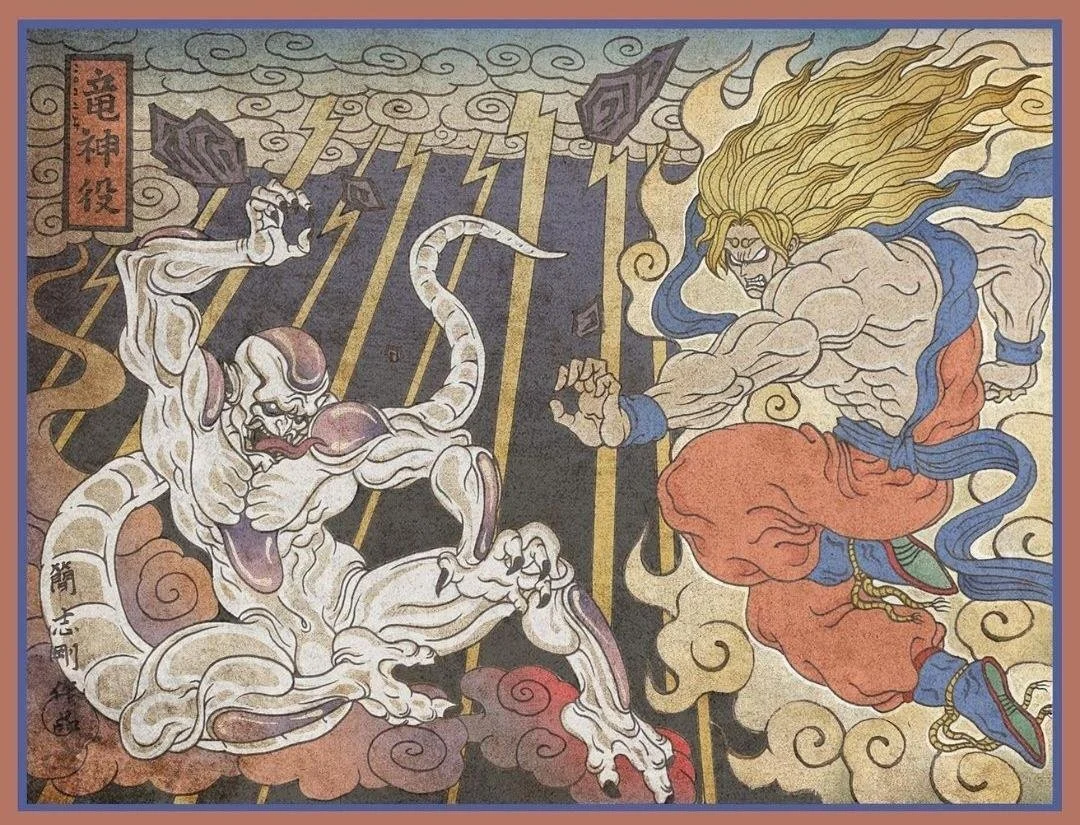
You may or may not be aware of a silly little anime (Japanese cartoon) Called ”Dragonball Z” where jacked super-men with unfathomable powers punch each other really hard… well, that’s not all there is to the story, there’s a far deeper side to the comical facade—the protagonist, Goku, has taught me many lessons, as has the anti-hero Vegeta.
I was eight years old when I first saw Goku transform into a Super Saiyan. Golden hair. Crackling energy. A warrior pushed beyond his limits, accessing something primal and transcendent simultaneously.
I didn't understand it then, but that moment changed my life.
Dragon Ball Z became more than entertainment—it became a template for how I approached training, growth, and ultimately, life itself. While other kids were learning from textbooks and traditional sports, I was absorbing lessons about transformation, discipline, and the warrior's path from these animated characters who could destroy planets.
It sounds absurd when I say it out loud. Yet decades later, as an adult who's built a life around training and human performance, I recognize that the show communicated something profound through archetypal language that bypassed my thinking mind entirely. It spoke directly to what it means to be a spiritual warrior—not someone seeking enlightenment as some distant goal, but someone learning to simply BE. To experience awareness. To achieve that profound merger of the present moment with total embodiment.
The Super Saiyan transformation, I've come to understand, is a perfect metaphor for enlightenment itself. It doesn't come from rejecting who you are or suppressing your darkness. It comes from full integration and surrender to what you are. The connection to the dark side—the rage, the shadow, the primal power—must be acknowledged and accepted without allowing it to lead you into darkness.
Goku's journey taught me this. And it led me down a path of "unorthodox" training methods that confused coaches, baffled peers, and served me better than anything conventional wisdom could have offered.
This isn't just a nostalgia piece. This is about recognizing timeless truths wherever they appear—even in a show about alien warriors—and applying them to become more fully human.
So let me tell you about the time Goku revolutionized his training in a way that perfectly mirrors what modern exercise science is only now beginning to understand.
Mastering the Art of Balancing Fury & Intention
You might think a show about alien warriors shooting energy beams has nothing to teach us about getting in shape. You'd be wrong.
Dragon Ball Z—the anime phenomenon that captivated millions—features warriors who can destroy planets and move faster than light. At its core, though, it's a story about training, transformation, and the pursuit of peak performance. The series' most iconic transformation, "Super Saiyan," depicts warriors surrounded by a golden aura of pure power, essentially an anime visualization of achieving an enlightened, transcendent state. Think of it as the ultimate flow state made visible.
During one pivotal storyline, these warriors face an enemy so formidable that raw power won't be enough. They retreat to a mystical "Hyperbolic Time Chamber"—a room where one day outside equals a year inside—to reinvent themselves. What happens next reveals a truth about human performance that most weekend warriors, CrossFitters, and even serious athletes are getting catastrophically wrong.
And here's the kicker: the strongest character makes the biggest mistake.
Vegeta’s Complex
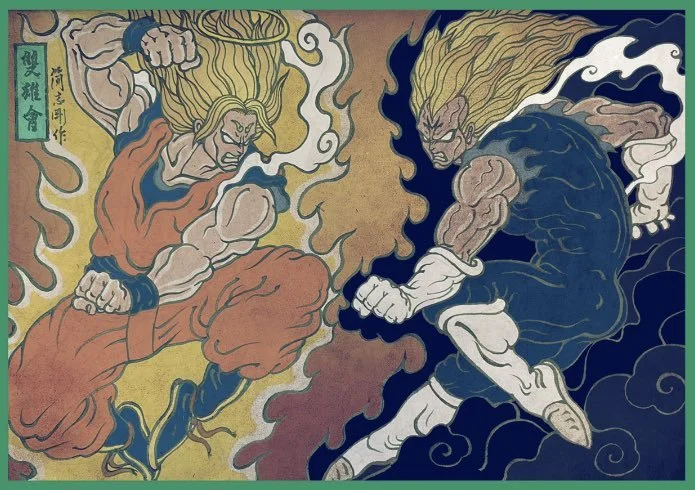
Vegeta, the series' proud warrior prince, enters the time chamber with a simple philosophy: more power, more intensity, all the time. He pushes beyond Super Saiyan to achieve even greater transformations—muscles bulging, power skyrocketing, the energy readings going off the charts.
He emerges confident he's achieved something unprecedented.
Then he fights. And he's slower. Clumsier. He can't land hits. His opponent dances around him effortlessly. All that power means nothing if you're too exhausted and sluggish to use it.
His son Trunks follows the same path with the same results. Massive power. Completely unusable.
Sound familiar?
This is the guy who trains to failure every session. The CrossFitter who redlines every workout. The runner who turns every easy day into a tempo run. The cyclist who can't ride without checking their power numbers and pushing into the red zone. They're accumulating fatigue, not capacity. They're Vegeta—impressive in the gym, limited everywhere else. (No hate on my metabolic party peeps!)
Goku’s Revelation
Then there's Goku, the series' protagonist. He enters the same chamber with his son and does something that initially seems... underwhelming.
He stays in Super Saiyan form constantly. While eating. While sleeping. While having casual conversations. He's not pushing for more power—he's making his current transformation effortless. He's mastering the base.
When he emerges and powers down, his son asks why he's turning off Super Saiyan. Goku's response: "I'm not."
He'd maintained it so long, so efficiently, that the golden aura disappeared. The transformation that once drained him in minutes now cost him almost nothing. It had become like his natural state.
When Goku fights, he's relaxed. Efficient. His movements are crisp. He can maintain his power for hours without fatigue. He doesn't have more raw strength than Vegeta's bulked-up form—he has something far more valuable: endurance, efficiency, and complete mastery of his foundation.
This is Zone 2 training. This is aerobic base building. It’s also skill and technique training—what Pavel Tsatsouline has been preaching for decades. And this is what almost everyone is getting wrong.
The Glycolytic Trap
Let's talk about what actually happens in your body when you train like Vegeta.
Human energy systems operate on a spectrum. At the lower intensities, you're running primarily on your aerobic system—efficient, sustainable, fat-burning. This is your oxidative pathway. At the highest intensities, you're running on your glycolytic system—powerful but inefficient, producing lactate, burning through glycogen, accumulating fatigue rapidly.
The glycolytic zone feels like hard work. You're breathing hard. Your muscles burn. You're sweating. Your heart rate is elevated. It feels productive.
And it is—in small doses.
The problem is that constantly hammering this zone creates a specific adaptation: you get better at suffering and producing power while fatigued, but you never expand your base capacity. Your aerobic system—the foundation that supports everything else—remains underdeveloped.
Worse, you're accumulating fatigue faster than you can recover from it. Your nervous system stays in a chronically stressed state. Your hormones get disrupted. Your immune system weakens. You might look fit, but you're becoming increasingly fragile.
You've become Vegeta: all show, limited go.
The Aerobic Foundation
Humans evolved as endurance creatures. Our ancestors didn't chase down prey with explosive speed—they persistence hunted, tracking animals for hours or days until the prey collapsed from exhaustion. Our physiology is built for this.
We have:
Exceptional thermoregulation through sweating
Efficient bipedal locomotion that conserves energy
The ability to metabolize fat for sustained energy
Slow-twitch muscle fibers designed for repetitive, sub-maximal efforts
When you neglect your aerobic base, you're fighting against your biological design.
This doesn't mean you shouldn't train strength, power, or high-intensity efforts. Those matter tremendously. But they're the house built on the foundation—and if the foundation is weak, the house will crumble. (Espeically if you intend to be athletic!)
Goku understood this intuitively. Master the base. Make the foundation effortless. Then everything else becomes possible.
Zone 2: A Misunderstood Tool
Zone 2 training has become trendy lately, and for good reason. It's aerobic training at an intensity where you can still hold a conversation, typically around 60-70% of maximum heart rate. At this intensity, you're maximizing mitochondrial development, improving fat oxidation, and building capillary density—all the infrastructure for endurance.
But here's where people go wrong: they treat Zone 2 like a checkbox.
"I did my 45 minutes of Zone 2 today, so now I can go destroy myself with a high-intensity session tomorrow."
That's not mastering the base. That's paying lip service to it.
Goku didn't spend one hour a day in Super Saiyan form. He lived in it. He made it his default state.
The missing implementation factors:
Volume Matters More Than You Think
Zone 2 isn't just about getting your heart rate in a certain range for a set duration. It's about accumulating significant volume at that intensity. Elite endurance athletes spend 80% or more of their training time in Zone 1 and 2. Not 30%. Not 50%. Eighty percent or more.
For the average person, this might mean:
4-6 hours per week of Zone 2 work minimum
Daily movement that keeps you in lower aerobic zones (walking, easy cycling, swimming)
Treating Zone 2 sessions as the foundation, not the afterthought
Consistency Trumps Intensity
It's better to do 45 minutes of true Zone 2 five times per week than to do three "Zone 2" sessions where you drift into Zone 3 and 4 because you're impatient or bored.
This is the discipline of mastery. Goku had to resist the urge to push harder. You have to resist the urge to check your pace, race the person next to you, or turn your easy run into a tempo workout.
The Intensity Ceiling
Here's the paradox: proper Zone 2 work actually raises your ceiling for high-intensity efforts.
When your aerobic base is massive, you:
Recover faster between high-intensity intervals
Can sustain higher absolute power outputs before going glycolytic
Produce less lactate at any given intensity
Clear lactate more efficiently when you do produce it
Your "easy" pace becomes faster without trying. Your threshold pace improves. Your top-end power increases.
But you can't shortcut this. You can't get there by constantly pushing into the glycolytic zone.
The Pavel Principle
Strength coach Pavel Tsatsouline (one of my greatest teachers) has been advocating for what he calls "Anti-Glycolytic Training" (A+A) for decades, and it mirrors Goku's approach perfectly.
Pavel's philosophy: train around the glycolytic zone. Build your aerobic power through alactic (very short, explosive efforts with full recovery) and aerobic work. Save glycolytic efforts for rare, specific peaks throughout the year.
Why? Because glycolytic training is expensive:
It requires extensive recovery
It taxes your nervous system heavily
It doesn't build the qualities you need most (sustainable power, work capacity, resilience)
It's the fastest path to overtraining and burnout
Professionals understand this. They train with patience. They build massive bases. They peak strategically, not constantly.
Pavel often says: "Train like a professional, and you'll become healthy. Train like an amateur, and you'll become injured."
The amateur thinks every session needs to be a gut-check. The professional knows that most sessions should feel almost easy—because they're building capacity, not demonstrating it.
Practical Implementation
Let's get specific. How do you actually train like Goku instead of Vegeta?
For Runners
The Mistake: every run becomes a tempo run or a race against your previous pace. You're constantly checking your watch, trying to beat yesterday's time.
The Goku Approach:
80% of your weekly mileage at conversational pace (you can speak in full sentences)
Use a heart rate monitor and stay disciplined about staying in Zone 2 (typically 130-150 bpm for most people, but this varies)
One long, slow run per week that builds your aerobic engine (90+ minutes if possible)
One true high-intensity session per week (intervals, tempo, hills)
One strength session focused on explosive power with full recovery between sets
Example Week:
Monday: 45 min easy run, Zone 2
Tuesday: 30 min easy run + explosive strength work (kettlebell swings, jumps, sprints with full recovery)
Wednesday: 60 min easy run, Zone 2
Thursday: REST or 30-90 min walk
Friday: Interval session (example: 6 x 3 min at threshold with 3 min recovery)
Saturday: 90-120 min long slow run, Zone 2
Sunday: 30-45 min easy run or cross-training
Notice: 5-6 hours of Zone 2 work, one hard session, lots of patience.
For Cyclists
The Mistake: every ride is a hammerfest. You're attacking every climb, chasing every rider, checking your power numbers constantly.
The Goku Approach:
Base rides at 55-75% of FTP (Functional Threshold Power)
Focus on pedaling efficiency and cadence (90-100 rpm)
Multiple weekly rides of 2+ hours at easy intensity
One high-intensity session per week (sweet spot intervals, VO2 max work)
Resist the urge to "win" group rides—most should be social pace
Example Week:
Monday: REST or 60 min recovery spin
Tuesday: 90 min base ride, Zone 2
Wednesday: Interval session (example: 4 x 8 min at sweet spot with 4 min recovery)
Thursday: 60 min base ride, Zone 2
Friday: REST or strength work
Saturday: 3-4 hour base ride, Zone 2
Sunday: 90-120 min base ride, Zone 2
Total: 8-10 hours, mostly aerobic, one hard day.
For Swimmers
The Mistake: every lap is a race. You're constantly pushing pace, never allowing true aerobic development.
The Goku Approach:
High volume at comfortable, sustainable pace
Focus on technique and efficiency (stroke count, body position)
Use a tempo trainer to maintain consistent, sub-threshold pace
One high-intensity set per week
Lots of drilling and technique work
Example Week:
Monday: 3000m steady swim, focus on technique
Tuesday: 2000m with technique drills + 500m easy
Wednesday: Interval set (example: 10 x 200m at threshold with 30 sec rest)
Thursday: REST or 1500m recovery swim
Friday: 3500m steady swim, Zone 2
Saturday: 4000m long swim, focus on efficiency
Sunday: 2000m easy + technique work
Total: 15,000-17,000 meters, mostly aerobic.
For General Fitness
The Mistake: every workout is a CrossFit WOD or HIIT session. You're smoked after every training day.
The Goku Approach:
Daily movement: walking, hiking, easy cycling (60+ min)
2-3 strength sessions per week focused on quality, not fatigue (low reps, explosive movements, full recovery)
1-2 true conditioning sessions per week (short, intense, fully recovered)
Prioritize sleep, stress management, and recovery
Example Week:
Monday: 60 min walk + strength (deadlifts, presses, focused work)
Tuesday: 45 min easy bike ride or swim
Wednesday: Conditioning (10 min EMOM: 5 kettlebell swings, 5 pushups, rest remainder)
Thursday: 90 min hike
Friday: Strength (squats, pulls, carries)
Saturday: 2 hour easy bike ride or long walk
Sunday: REST or gentle yoga/mobility
The pattern: lots of easy movement, brief intense work, full recovery.
The Missing Piece: Patience
Here's the plot twist that most people can't accept: building a real aerobic base takes months, not weeks.
You won't see dramatic changes in the first month. You might even feel slower. Your ego will tell you to push harder.
This is the test. This is where Vegeta failed and Goku succeeded.
Vegeta needed immediate results. Goku trusted the process.
After 3-6 months of disciplined base building, something magical happens:
Your easy pace becomes significantly faster without increased effort
You recover between hard efforts almost instantly
You can sustain higher intensities for longer durations
You feel energized instead of constantly drained
Your body composition improves (better fat oxidation)
Your resting heart rate drops
Your HRV (heart rate variability) improves
You've mastered the base. You've become Super Saiyan without the visible strain.
Now, when you add intensity back in strategically, you'll find you can express far more power than before—and sustain it. The high-intensity work that used to wreck you for days now becomes manageable.
You haven't just become more powerful. You've become anti-fragile.
The Professional Mindset
Pavel Tsatsouline talks about "training to win" versus "training to train." Amateurs train to train—they show up and destroy themselves to feel like they worked hard. Professionals train to win—they show up and do exactly what's needed to improve, no more, no less.
Professionals peak strategically. They might have 2-3 major competitions per year where they're truly in peak condition. The rest of the year? They're building, maintaining, developing.
You don't need to be a professional athlete to adopt this mindset. You just need to ask yourself: what's my actual goal?
If your goal is long-term health, resilience, and sustainable performance, then you need to train like Goku. Build the base. Master the fundamentals. Make your default state one of effortless capacity.
If your goal is to feel destroyed after every workout and post it on social media... well, there's Vegeta's path. It's available. It just doesn't lead where you think it does.
Side note: no hate if that’s your style! At the end of the day I applaud ANY exercise over NONE but the warning is one of caution for burnout.
Endurance is Imperative
Let's return to the fundamental truth: humans are endurance creatures.
This doesn't diminish the importance of strength and power. I love strength and conditioning work—it's my favorite training modality. But strength without an aerobic foundation is like a sports car with a tiny gas tank. Impressive for about five minutes, then useless.
True human performance integrates both:
The strength to express force
The endurance to sustain effort
The power to accelerate when needed
The recovery capacity to do it again tomorrow
When you neglect endurance, you're only accessing part of your human potential.
The modern world has made it easy to avoid endurance. We drive instead of walk. We take elevators instead of stairs. We sprint through workouts and then collapse on the couch.
But your body is designed to move, consistently and sustainably, for hours. When you reclaim that capacity, everything else improves: your mood, your metabolism, your resilience, your longevity.
The Cell Games
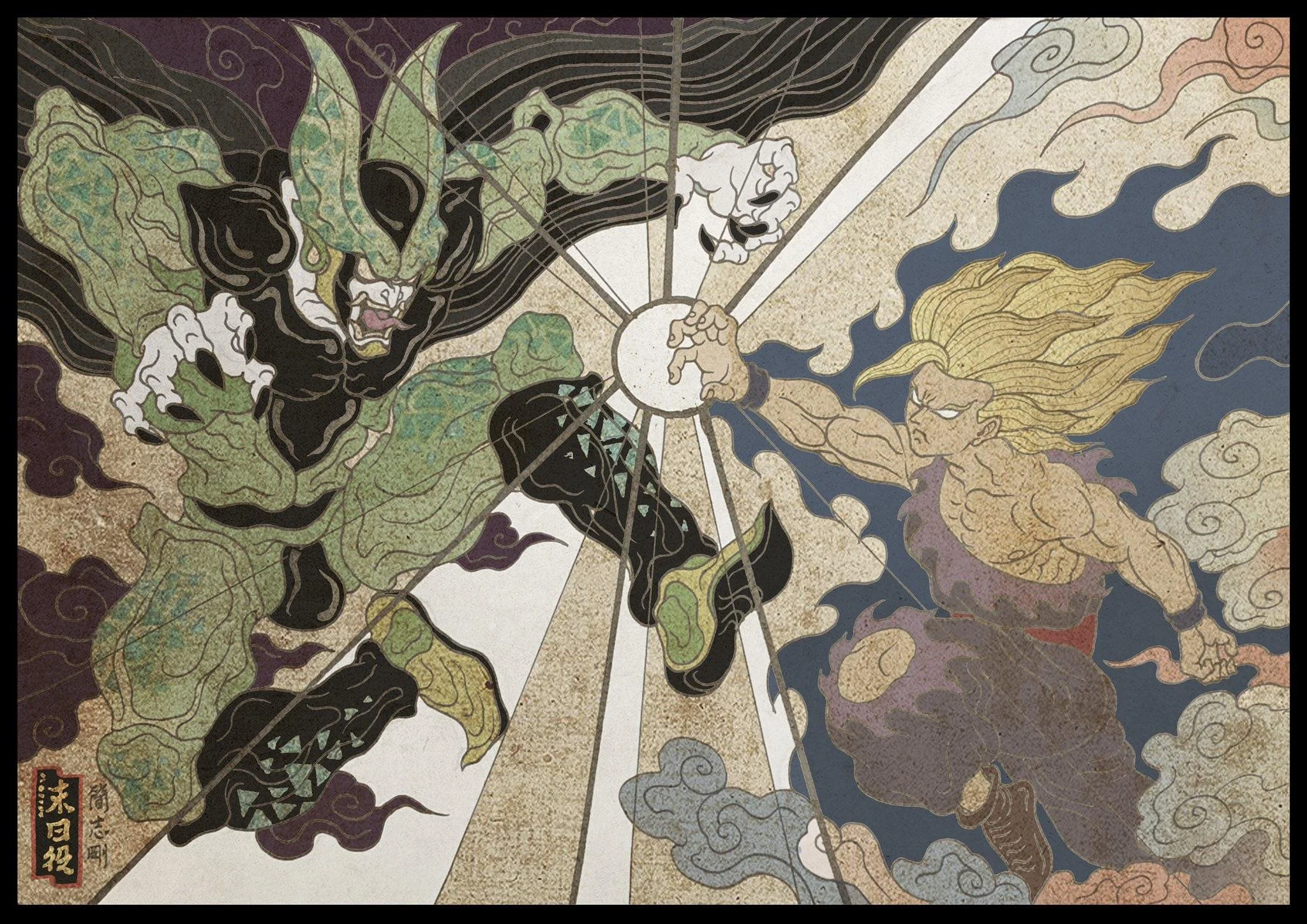
In Dragon Ball Z, this story arc culminates in the "Cell Games"—a tournament where Earth's warriors face the ultimate enemy. Vegeta and Trunks, with all their bulked-up power, can't compete. They're too slow, too inefficient, too limited.
Goku, who mastered the base, fights with a calm efficiency that shocks everyone. He's not straining. He's not desperate. He moves with the ease of someone operating well within their capacity, even against an opponent of overwhelming strength.
He doesn't win through brute force. He wins through mastery, strategy, and the foundation he built. His transformation isn't visible anymore because it's become who he is, not something he does.
This is the ultimate lesson: true power doesn't announce itself. It doesn't need to. It simply is.
When you've mastered your base—when your aerobic foundation is so solid that everything else flows from it effortlessly—you stop needing to prove anything. You can access your power when needed, sustain it as long as required, and recover to do it again.
You're not performing strength. You're not performing endurance. You're simply capable, in all directions, whenever called upon.
Integration
Here's where we return to that deeper truth I mentioned at the beginning: the Super Saiyan transformation as metaphor for enlightenment.
Goku's path wasn't about rejecting his Saiyan nature—the warrior race known for their aggression and love of battle. It was about integrating it. Accepting the darkness, the rage, the primal power, without being consumed by it.
Vegeta, by contrast, was always fighting himself. Trying to prove something. Chasing more power because he couldn't accept what he already was. His training reflected this internal conflict—always pushing, never resting, accumulating strength but losing capacity.
The same pattern plays out in how we train and live.
When you constantly redline your training, you're running from something. Maybe it's insecurity. Maybe it's fear of being ordinary. Maybe it's an inability to sit with discomfort that isn't extreme.
When you train with patience—building your base, mastering fundamentals, trusting the process—you're integrating. You're accepting that growth happens in the quiet moments, not just the spectacular ones. You're acknowledging both your capacity for explosive power and your need for sustainable endurance.
You're becoming whole.
This is what it means to be a spiritual warrior in the modern age. Not someone who seeks enlightenment as an escape from being human, but someone who fully embodies their humanity—all of it. The light and the shadow. The power and the patience. The intensity and the rest.
The Super Saiyan doesn't radiate gold because they've transcended their nature. They glow because they've fully accepted it and learned to channel it with complete presence.
Your training is a microcosm of this. Every session is an opportunity to practice being present, accepting where you are, and trusting that mastery comes from consistency, not heroics.
The Practical Path Forward
So where do you start if you've been training like Vegeta and want to shift to Goku's approach?
Step 1: Honest Assessment
Look at your training over the past month. How much was truly easy, aerobic work? How much was moderate-to-hard? How much was genuinely high-intensity?
If you're like most people, you'll find you have very little true easy work and very little true high-intensity work. Instead, you have a lot of "moderate-hard"—the glycolytic middle ground that accumulates fatigue without building either extreme.
Step 2: The 80/20 Commitment
Commit to three months of 80/20 training: 80% of your training time in Zone 1-2, 20% in Zone 4-5. Nothing in Zone 3 unless it's part of a planned progression during an interval session.
This will feel wrong at first. Your easy days will feel too easy. You'll be tempted to push. Don't.
Step 3: Get Objective
Use a heart rate monitor or power meter. Your perception of effort is unreliable, especially at first. You need objective feedback to keep you honest.
For running: stay below your aerobic threshold (roughly 180 minus your age in beats per minute, though this varies).
For cycling: stay below 75% of FTP on easy days.
For swimming: if you can't hold a conversation (or maintain your stroke count), you're going too hard.
Step 4: Embrace Volume
Gradually increase the total volume of your easy work. If you're currently doing 3 hours per week total, build to 5-6 hours over the next 8-12 weeks. Most of this should be Zone 2.
This doesn't mean training more days—it means making your easy days longer and truly easy.
Step 5: Strategic Intensity
Keep one, maybe two, hard sessions per week. These should be genuinely hard—Zone 4-5 work with proper recovery intervals.
Examples:
Runners: 6-8 x 800m at 5K pace with 400m jog recovery
Cyclists: 4 x 8 min at 95-100% FTP with 4 min easy recovery
Swimmers: 8 x 100m at threshold with 20 sec rest
The rest of your week? Easy. Building the base. Living in Super Saiyan form without the visible strain.
Step 6: Strength Without Depletion
If you're incorporating strength work, follow Pavel's principles:
Focus on quality movement, not fatigue
Use loads that are challenging but allow crisp technique (roughly 70-80% of max)
Take full recovery between sets (3-5 minutes)
Stop each set before failure—leave 1-2 reps in the tank
Emphasize explosive movements: swings, jumps, throws, Olympic lifts
You're building power and coordination, not demonstrating toughness.
Step 7: Track Metrics That Matter
Don't just track pace or weight lifted. Track:
Resting heart rate (should decrease over time)
HRV (should improve and stabilize)
How you feel during easy sessions (should feel easier at the same heart rate)
Recovery time between hard efforts (should decrease)
Sleep quality (should improve)
Mood and energy (should stabilize and elevate)
These tell you if you're actually building capacity or just accumulating fatigue.
The Long Game
Here's the final truth: this approach requires you to think in years, not weeks.
In three months, you'll notice improvements. In six months, you'll feel transformed. In a year, you'll be operating at a level that would have seemed impossible with your old approach.
But you have to trust the process when everyone around you is sprinting and you're building.
You have to resist the ego that wants immediate validation.
You have to accept that mastery is boring most of the time—it's the same foundational work, day after day, until it becomes effortless.
This is exactly what Goku did. While Vegeta was chasing the spectacular, Goku was living in the mundane. Eating meals in Super Saiyan form. Sleeping in it. Making it so ordinary that it stopped being special and started being foundational.
That's the paradox of mastery: the extraordinary becomes ordinary through repetition, and in doing so, it elevates your entire baseline.
Your "normal" becomes what used to be your peak.
The Warrior's Path
I started this piece with a personal confession: Dragon Ball Z shaped how I approach training and life. Three decades later, I stand by those lessons.
Not because they came from a cartoon, but because they articulated timeless truths through archetypal language that my eight-year-old self could absorb completely.
The warrior who masters himself defeats the warrior who only masters his enemy.
The transformation that becomes effortless is more powerful than the transformation that requires constant strain.
The path to transcendence isn't found in rejecting your nature but in fully integrating it—light and shadow, power and patience, intensity and endurance.
These aren't just training principles. They're life principles.
When you train with patience, you learn patience.
When you trust the process, you learn trust.
When you integrate your capacity for both explosive power and sustainable endurance, you become integrated as a person.
The gym, the road, the pool—these are just the laboratories where you practice being human. Fully human. Enduring, powerful, resilient, present.
So train like Goku. Master the base. Make your foundation so solid that everything else flows from it effortlessly. Accept all of what you are—the drive for intensity and the need for patience—and integrate them into a sustainable practice that serves you for decades, not just months.
Stop chasing enlightenment. Stop performing transformation.
Just be. Present. Embodied. Consistently showing up to do the work that matters, even when it's not spectacular.
That's mastering Super Saiyan, the ultimate power within you.
That's the human secret.
And it's available to you right now, if you're willing to trust the process and master the base.
The time chamber is open. The choice is yours.
Will you chase power like Vegeta, or master presence like Goku?
Your training will reveal the answer.
About the Author's Approach
The principles outlined here aren't theoretical. They're the result of decades of practice, informed by childhood lessons from a “silly” anime, refined through studying coaches like Pavel Tsatsouline, Charles Poliquin, Ido Portal & many more—validated through consistent application. The unorthodox path—the one that values patience over performance, mastery over intensity, integration over separation—has proven itself time and again. Not just in training, but in life. The warriors who endure aren't the ones who burn brightest. They're the ones who learn to sustain their flame indefinitely. That's the path worth walking.
